
Trong doanh nghiệp sản xuất, ERP giúp quản lý kế hoạch, nguồn lực, vật tư và các hoạt động quản trị, trong khi MES phản ánh những gì đang diễn ra trực tiếp tại nhà máy. Khi hai hệ thống hoạt động tách rời hoặc kết nối chưa hiệu quả, khoảng cách giữa kế hoạch và thực tế sản xuất dễ xuất hiện. Với kinh nghiệm triển khai và tích hợp các hệ thống quản trị - vận hành, NGSC giúp doanh nghiệp kết nối ERP và MES để dữ liệu được trao đổi xuyên suốt, nâng cao khả năng kiểm soát và hỗ trợ ra quyết định kịp thời hơn.
Vì sao ERP và MES cần được kết nối?
ERP và MES đảm nhiệm hai lớp khác nhau trong hoạt động sản xuất.
ERP tập trung vào cấp quản trị, hỗ trợ doanh nghiệp quản lý đơn hàng, kế hoạch sản xuất, nguyên vật liệu, tồn kho, tài chính và các nguồn lực liên quan. Trong khi đó, MES hoạt động gần với nhà máy hơn, ghi nhận và theo dõi các thông tin như tiến độ sản xuất, sản lượng thực tế, mức tiêu hao vật tư, chất lượng sản phẩm hay trạng thái thực hiện của từng lệnh sản xuất.
Nếu hai hệ thống hoạt động độc lập, doanh nghiệp có thể có đầy đủ dữ liệu ở từng hệ thống nhưng vẫn thiếu một dòng thông tin xuyên suốt giữa kế hoạch và vận hành.
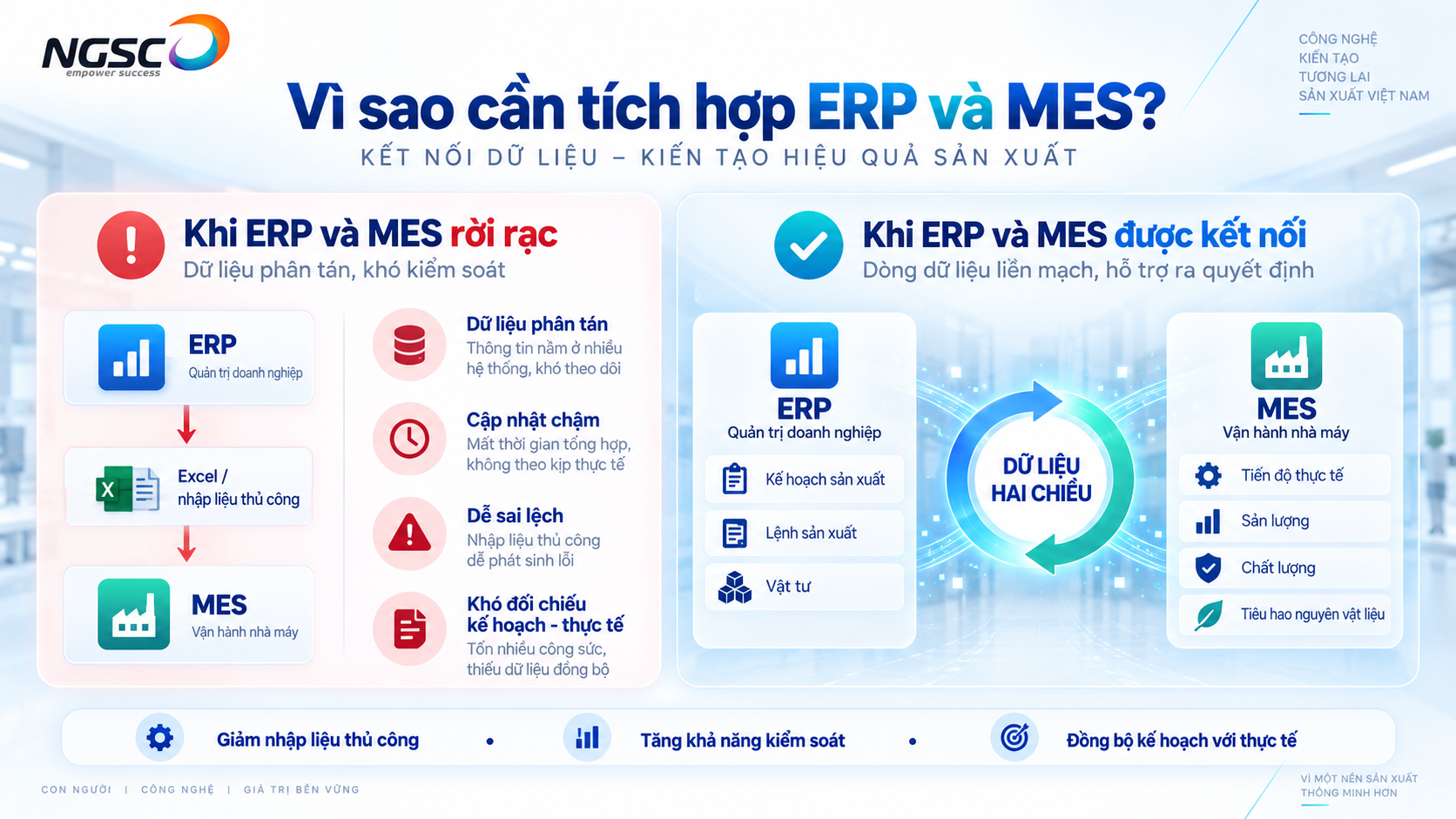
Hình 1: Vì sao cần tích hợp ERP và MES?
Khi ERP và MES được kết nối, kế hoạch sản xuất, lệnh sản xuất hay thông tin nguyên vật liệu từ ERP có thể được chuyển xuống MES để phục vụ vận hành. Ngược lại, dữ liệu thực tế tại nhà máy như sản lượng, mức tiêu hao, tiến độ hay kết quả chất lượng có thể được cập nhật trở lại ERP.
Nhờ đó, doanh nghiệp có thể theo dõi rõ hơn sự chênh lệch giữa kế hoạch đã đặt ra và tình hình sản xuất thực tế, thay vì phải chờ tổng hợp dữ liệu từ nhiều nguồn khác nhau.
Đối với những doanh nghiệp đã triển khai tích hợp ERP và MES, vấn đề cần quan tâm không chỉ là hai hệ thống "đã kết nối hay chưa". Doanh nghiệp cũng cần đánh giá dữ liệu có được trao đổi đầy đủ, chính xác và đủ nhanh để phục vụ vận hành hay không.
Một kết nối tồn tại về mặt kỹ thuật nhưng vẫn phụ thuộc nhiều vào nhập liệu thủ công hoặc không cung cấp được thông tin cần thiết cho người quản lý thì chưa thực sự tạo ra giá trị tối ưu.
Điều gì xảy ra khi ERP và MES không được tích hợp hiệu quả?
Khoảng cách giữa hệ thống quản trị và hệ thống vận hành có thể tạo ra nhiều điểm gián đoạn trong quá trình sản xuất.
Trước hết là tình trạng dữ liệu rời rạc. Bộ phận kế hoạch có thể theo dõi thông tin trên ERP, trong khi nhà máy làm việc với dữ liệu trên MES hoặc các công cụ khác. Khi cần đối chiếu, nhân sự phải tổng hợp dữ liệu từ nhiều nguồn, làm tăng thời gian xử lý và nguy cơ sai lệch.
Việc nhập lại dữ liệu giữa các hệ thống cũng tạo thêm những thao tác không cần thiết. Một thay đổi trong kế hoạch sản xuất nếu không được cập nhật kịp thời xuống nhà máy có thể khiến hoạt động vận hành tiếp tục dựa trên thông tin cũ.
Ngược lại, nếu dữ liệu sản xuất thực tế không được phản hồi nhanh lên hệ thống quản trị, doanh nghiệp khó có được cái nhìn chính xác về tiến độ, mức tiêu hao hay tình trạng đơn hàng.
Khoảng cách này càng rõ khi doanh nghiệp cần đưa ra quyết định nhanh. Khi thông tin giữa kế hoạch và sản xuất không đồng bộ, người quản lý phải dành thêm thời gian xác minh dữ liệu trước khi điều chỉnh lịch sản xuất, nguyên vật liệu hoặc nguồn lực.
Vì vậy, giá trị của tích hợp ERP và MES không chỉ nằm ở việc kết nối hai phần mềm. Mục tiêu quan trọng hơn là tạo ra một dòng dữ liệu nhất quán từ cấp quản trị đến hoạt động tại nhà máy và ngược lại.
NGSC hỗ trợ doanh nghiệp kết nối ERP và MES như thế nào?
Việc tích hợp ERP và MES cần được xây dựng dựa trên hiện trạng hệ thống, quy trình sản xuất và nhu cầu quản trị thực tế của từng doanh nghiệp. Không phải mọi doanh nghiệp đều cần cùng một mô hình kết nối hay cùng một luồng dữ liệu.
NGSC có thể đồng hành cùng doanh nghiệp từ bước đánh giá hiện trạng ERP và MES, xác định những điểm dữ liệu cần trao đổi, thiết kế phương án tích hợp đến hỗ trợ tối ưu quá trình vận hành sau triển khai.
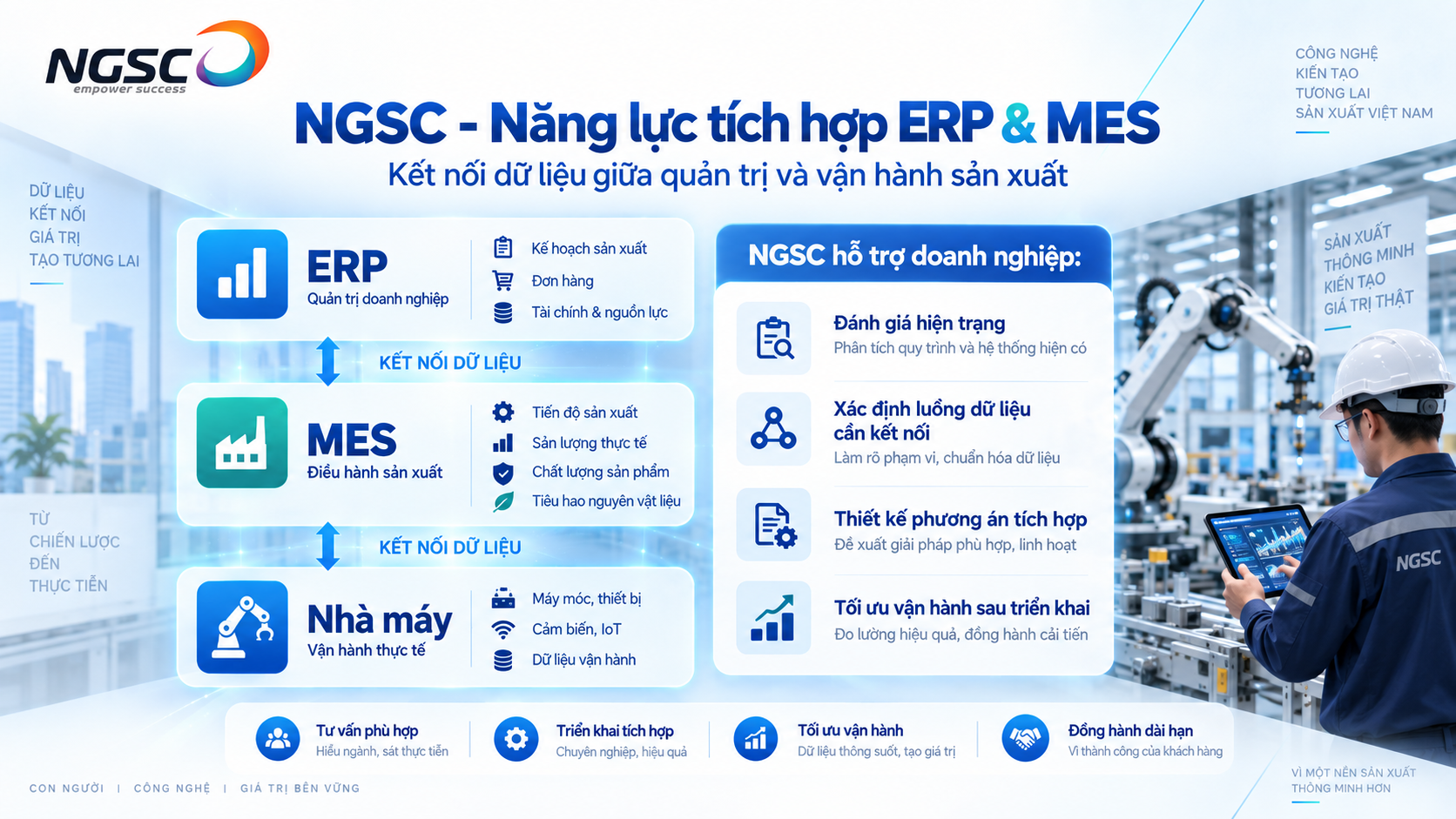
Hình 2: NGSC - Năng lực tích hợp ERP và MES
Thay vì xem ERP và MES như hai hệ thống độc lập, mục tiêu của quá trình tích hợp là tạo ra sự liên kết giữa lớp quản trị và lớp sản xuất, giúp thông tin được luân chuyển nhất quán hơn và hỗ trợ doanh nghiệp theo dõi hoạt động từ kế hoạch đến thực tế.
Đối với doanh nghiệp chưa tích hợp ERP và MES, đây có thể là bước đầu để xây dựng một nền tảng vận hành đồng bộ hơn. Với doanh nghiệp đã triển khai, việc đánh giá lại chất lượng kết nối cũng giúp xác định những điểm còn gián đoạn và cơ hội tối ưu hệ thống hiện tại.
NGSC cung cấp dịch vụ tư vấn, thiết kế và triển khai tích hợp ERP - MES, giúp doanh nghiệp kết nối dữ liệu giữa cấp quản trị và vận hành sản xuất, giảm gián đoạn thông tin và nâng cao hiệu quả điều hành.
----
Connecting ERP and MES: Bridging the Gap Between Planning and Manufacturing Operations
In manufacturing enterprises, ERP supports the management of planning, resources, materials, and administrative activities, while MES reflects what is happening directly on the shop floor. When these two systems operate separately or are not effectively connected, gaps can easily emerge between production plans and actual execution. With experience in implementing and integrating management and operational systems, NGSC helps enterprises connect ERP and MES so that data can flow seamlessly across systems, improving visibility and enabling more timely decision-making.
Why do ERP and MES need to be integrated?
ERP and MES serve two different layers of manufacturing operations.
ERP focuses on the management level, helping enterprises manage orders, production planning, raw materials, inventory, finance, and other related resources. MES, on the other hand, operates closer to the factory floor, capturing and monitoring information such as production progress, actual output, material consumption, product quality, and the execution status of individual production orders.
If the two systems operate independently, an enterprise may have sufficient data within each system but still lack a continuous flow of information between planning and operations.
Figure 1: Why is ERP and MES integration necessary?
When ERP and MES are integrated, production plans, production orders, and material information from ERP can be transferred to MES to support shop-floor operations. In return, actual production data such as output, material consumption, progress, and quality results can be updated back to ERP.
This enables enterprises to monitor the gap between planned production and actual factory performance more clearly, instead of having to wait for data to be manually consolidated from multiple sources.
For enterprises that have already implemented ERP-MES integration, the key question is not only whether the two systems are technically connected. It is also important to assess whether data is exchanged completely, accurately, and quickly enough to support operational needs.
A technical connection that still depends heavily on manual data entry or fails to provide the information required by managers may not yet deliver optimal business value.
What happens when ERP and MES are not integrated effectively?
The gap between management systems and operational systems can create multiple points of disruption throughout the production process.
One of the first challenges is fragmented data. Planning teams may work with information in ERP, while factory teams rely on MES or other operational tools. When reconciliation is required, employees may need to consolidate information from multiple sources, increasing processing time and the risk of inconsistencies.
Re-entering data between systems also creates unnecessary manual work. If a change in the production plan is not updated to the factory in a timely manner, shop-floor operations may continue based on outdated information.
Conversely, if actual production data is not quickly reflected back into the management system, the enterprise may lack an accurate view of progress, material consumption, or order status.
This gap becomes even more critical when decisions need to be made quickly. When planning and production data are not synchronized, managers may need to spend additional time verifying information before adjusting production schedules, materials, or resources.
Therefore, the value of ERP-MES integration is not simply about connecting two software systems. More importantly, it is about creating a consistent flow of data from management to shop-floor operations and back again.
How does NGSC support ERP and MES integration?
ERP and MES integration should be designed based on each enterprise's current system landscape, manufacturing processes, and actual management requirements. Not every enterprise requires the same integration model or the same data flow.
NGSC can support enterprises from the assessment of existing ERP and MES systems, identification of required data exchange points, and integration design to the optimization of post-implementation operations.
Figure 2: NGSC - ERP and MES Integration Capabilities
Rather than treating ERP and MES as two separate systems, the objective of integration is to establish a connection between the management layer and the production layer, allowing information to flow more consistently and enabling enterprises to monitor operations from planning through actual execution.
For enterprises that have not yet integrated ERP and MES, this can be a first step toward building a more synchronized operational foundation. For those that have already implemented integration, reassessing connection quality can help identify remaining gaps and opportunities to further optimize the current system.
NGSC provides consulting, design, and implementation services for ERP-MES integration, helping enterprises connect data between management and manufacturing operations, reduce information disruptions, and improve overall operational efficiency.